The power of response: how Milan hotels can prepare for the Winter Olympic Games
Recent review data from the Q3 2025 Guest Experience Benchmark Infographics
Recent review data from the Q3 2025 Guest Experience Benchmark Infographics
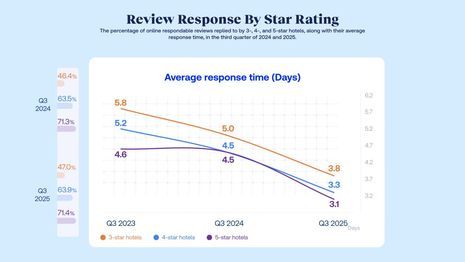
As Milan prepares to take center stage for the 2026 Winter Olympic Games, hotels across the city are facing a once-in-a-generation opportunity. With an expected influx of international travelers, athletes, media, and delegates, the spotlight will shine not only on Italy’s cultural capital but also on the service and hospitality standards of its accommodations. One often overlooked, yet critical, lever for success is online review responses. Responding to guest feedback has evolved from a best practice to a strategic necessity. In today’s experience-driven hospitality landscape, reputation is currency, and the response to guest reviews is one of the most visible ways a brand communicates attentiveness, care, and quality. Recent review data from the Q3 2025 Guest Experience Benchmark Infographics paints a clear picture of where Milan hotels currently stand when it comes to reputation management: The gap is particularly noticeable in the luxury segment. For 5-star hotels, where guests have high expectations around service and attention to detail, leaving reviews unanswered can weaken the overall guest experience. In an environment where online reviews heavily influence booking decisions, response rates play a key role in shaping future guest expectations. Looking at the wider picture, the European average response rate of 61.7% puts Milan’s performance into perspective and highlights a clear opportunity for hotels across all segments to further improve their online reputation strategy.Current trends: How are Milan hotels performing?

 The power of response: how Milan hotels can prepare for the Winter Olympic Games
Recent review data from the Q3 2025 Guest Experience Benchmark Infographics
The value of management responses to guest reviews extends far beyond damage control. It’s about shaping perception, enhancing loyalty, and even influencing pricing strategy.
As Milan looks ahead to hosting the Winter Olympics, it’s worth taking a closer look at what happened just two years earlier in Paris. The 2024 Summer Games offered a clear reminder that global events bring not only increased demand, but also increased expectations, scrutiny, and competition. In this webinar hosted by Shiji and Lighthouse, Blake Reiter, Director of Hospitality Research at Lighthouse, and Bruno Saragat, Sales Engineer and Product Specialist at Reviewpro Reputation, unpacked the hospitality data from Paris and revealed important lessons that hoteliers can use to prepare for 2026.
One of the most telling insights? While millions visited Paris, traditional hotels actually saw a decline in review activity, while short-term rentals surged with a 90% year-over-year increase. These listings often came with more competitive pricing and clearer terms, capturing the attention of guests looking for value and flexibility.
Meanwhile, many mid-tier hotels misjudged demand, setting high prices far in advance. Rates peaked at €530 almost a year before the event but were later slashed by nearly half as bookings stalled. By the time the Games began, average rates had dropped to around €274. Despite strong final occupancy, guests who had paid premium prices early on often left frustrated reviews, citing a lack of value for money and unpleasant surprises like hidden fees. Even luxury hotels weren’t immune, with additional charges eroding trust and satisfaction.
The key takeaway: Pricing and guest satisfaction are closely intertwined, especially during global events. Guests are more sensitive to fairness and transparency than ever, and they’re vocal about it. Review responses, especially those that acknowledge concerns and clarify value, will play a crucial role in shaping public perception and maintaining reputation throughout the Olympic period.
Beyond Paris, industry leaders like IDeaS and LodgIQ have also highlighted the importance of forward planning when preparing for high-impact events. Their playbooks emphasize that successful hotels treat events like the Olympics not as isolated spikes, but as entire demand ecosystems, with fluctuating booking curves, shifting guest segments, and evolving expectations. IDeaS, for example, points to past events like London 2012 where traditional forecasting models failed because they didn’t account for changes in traveler behavior, such as reduced corporate bookings or last-minute domestic demand. LodgIQ similarly advises hotels to break down each event day and surrounding dates as micro-seasons, each requiring its own pricing and distribution approach. The key takeaway is simple: when hotels align their commercial strategy, operational plans, and reputation management ahead of time rather than reacting during the event, they don’t just see higher rates. They build lasting guest satisfaction and long-term brand loyalty.
To seize the Olympic moment and avoid reputational risk, Milanese hoteliers need to treat review management like any other core operational function.
Expect a surge in review volume. Whether it’s expanding internal staff or leveraging AI-powered tools, ensure you’re equipped to handle the load efficiently.
Create guidelines for tone, response time, and escalation protocols. Every review — positive or negative — should receive a thoughtful reply within 48-72 hours.
Your best reviews (and responses) can serve as authentic marketing assets. Use them on your website, booking flows, or across social media to demonstrate commitment to excellence.
Most reviews originate from real-time issues that weren’t resolved on the spot. Empower staff to handle complaints proactively to reduce negative reviews in the first place.
The good news: tools are available to support hoteliers in this mission.
Reputation management tools with integrated AI capabilities enable faster, more consistent responses at scale. They help prioritize reviews based on sentiment and impact, suggest draft responses aligned with your brand voice, and offer data-driven insights to improve operations.
The 2026 Winter Olympic Games are more than just a global sporting event; they’re a moment for Milan’s hotels to shine. With the world watching, how hotels handle guest feedback will say a lot about their service culture. For Milan hotels, the key to success is simple: treat every review like a guest at your front desk: visible, important, and worth responding to.
By investing in a robust reputation management strategy today, hotels won’t just improve their review scores. They’ll build long-term guest loyalty, justify higher rates, and stand out in a highly competitive market, making a lasting impression long after the closing ceremony.
Shiji is a global technology company dedicated to providing innovative solutions for the hospitality industry, ensuring seamless operations for hoteliers day and night. Built on the Shiji Platform—the only truly global hotel technology platform—Shiji's cloud-based solutions include property management system, point-of-sale, guest engagement, distribution, payments, and data intelligence for over 91,000 hotels worldwide, including the largest hotel chains. With more than 5,000 employees across the world, Shiji is a trusted partner for the world's leading hoteliers, delivering technology that works as continuously as the industry itself. That's why the best hotels run on Shiji—day and night. While its primary focus is on hospitality, Shiji also serves select customers in food service, retail, and entertainment in certain regions. For more information, visit shijigroup.com.
Organization
Shiji Group
www.shijigroup.com/
Saarbrücker Str. 36A
Berlin, 10405
Germany


Recent News
 Shiji Hits Major Milestone with 400th Hyatt Infrasys POS and Full Digital F&B Ecosystem Install Shiji Hits Major Milestone with 400th Hyatt Infrasys POS and Full Digital F&B Ecosystem Install |
 2025 Guest Experience: How Hotels Are Winning Satisfaction in a Year of Record Demand | By Bruno Saragat 2025 Guest Experience: How Hotels Are Winning Satisfaction in a Year of Record Demand | By Bruno Saragat |
|
More time for guests: the impact of seamless technology at Sunborn London |