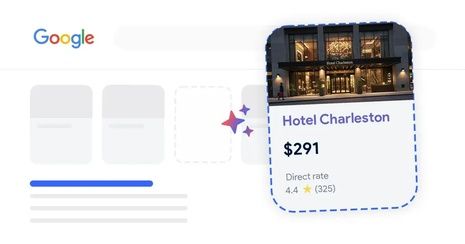
PMax for Travel Goals: Maximizing direct bookings with AI-powered ads
In the battle for direct bookings, hotels face intense competition from OTAs’ marketing power in the online space. In 2024, the four largest players—Expedia Group, Booking Holdings, Airbnb, and Trip.com Group—spent $17.8 billion on sales and marketing. Beyond their vast budgets, OTAs also leverage powerful algorithms to optimize every aspect of their campaigns, consistently achieving higher ROAS (Return on Ad Spend) than individual properties. This leaves hotels scrambling to keep up. Fortunately, there’s a way to help level the playing field. Google’s Performance Max for Travel Goals offers an AI-powered solution that automates ad placement and spend, allowing hotels to compete with OTAs and drive more direct bookings. Performance Max (PMax) is a type of automated campaign that Google rolled out in late 2021. PMax is goal-based, meaning businesses set objectives—e.g., increase online sales or generate leads—and PMax will run the campaign across Google’s entire network, including Search, YouTube, Display, Discover, Gmail, and Maps. In March 2023, Google launched PMax for Travel Goals, a type of Performance Max campaign designed to target high-intent travelers at multiple touchpoints on the booking journey. Unlike traditional hotel advertising campaigns, where marketers had to manage channels separately across different platforms, constantly adjust bids, analyze performance metrics, and create channel-specific creative assets, PMax for Travel Goals consolidates everything into a single AI-powered campaign. PMax uses AI to continuously optimize keywords, ad copy, channels, audience segments, budget allocations, bid placements, and make more accurate predictions about what elements perform best. This specialized version of PMax includes several features designed for hotels: Let’s look at how a campaign with PMax for Travel Goals would work for a fictional hotel in Charleston, SC. The hotel’s marketing manager sets up a Performance Max campaign through their Google Ads account, beginning with the creation of a hotel properties feed. They chose to connect their Google Business profile, which already showcases their downtown location and 4.7-star rating. Alternative ways could be linking a Hotel Center account, using Google’s hotel picker tool, or uploading Google Maps URLs. With the feed established, the manager sets a target ROAS of 400% with a $40 daily budget and uploads these assets: PMax’s AI analyzes Google user data to serve ads to high-converting potential guests, such as: When displaying ads across Google’s network, PMax dynamically adjusts bidding based on: The system monitors current search patterns and user intent for the hotel. When it detects high-intent searches related to the property or the Southeastern region, it analyzes conversion signals to determine booking likelihood and automatically increases bids for valuable potential reservations. The system also responds to competitive pricing, adjusting bids when competitor rates change. As rooms fill and availability becomes limited for specific dates—for example, during the Wine + Food Festival in March—PMax detects the change in inventory through the hotel’s booking system, automatically reducing spend on those dates while maintaining visibility for shoulder dates. If a group cancellation suddenly opens multiple rooms, PMax immediately shifts budget allocation to target last-minute planners searching for accommodations. PMax adjusts bids based on demand forecasting by analyzing signals such as historical booking patterns (like Charleston’s wedding season spikes), market trends (increased interest in historic districts), typical lead times, and external events (graduation weekends, corporate retreats) to predict occupancy. This allows the hotel to proactively adjust its bidding strategy weeks in advance. To achieve conversion goals across Google-owned platforms, PMax uses machine learning to test different ad combinations, suggesting compelling headlines and descriptions. In our example for the Charleston hotel, the system discovers that the images of their traditional decor rooms showing updated pricing perform best in the search engine, while the video showcasing the hotel’s veranda and garden generates longer view times and higher click-through rates on YouTube. PMax provides detailed property-level reporting showing campaign ROAS and the highest converting channel, allowing hotels to make manual adjustments. In our example, the performance reports show that: Based on that, the Charleston Hotel manager makes adjustments, including: While the highly automated nature of PMax means relinquishing some control over exactly where and when ads appear, the benefits make it an essential tool for hotel marketing and revenue management teams. Performance Max for Travel Goals: Performance Max campaigns create ads in multiple formats that are automatically served across Google channels, including Maps, Search, YouTube, and Hotel Ads, reaching potential guests at every stage of their journey. PMax helps properties build their direct booking channel strategy without requiring OTA-level budgets. Google reports that Corissia Hotels & Resort in Greece achieved a “32% increase in revenue and a 26% increase in total direct bookings” within just one month of implementation. This direct channel growth decreases commission costs and reduces reliance on third-party distribution. Powered by AI, Performance Max creates a dynamic connection between pricing, inventory, and marketing tactics. It uses real-time pricing information to showcase current rates while integrating demand forecasts, length-of-stay restrictions, and occupancy trends to optimize bidding. When high-value dates or room types need additional visibility, the system automatically redistributes budget to prioritize those opportunities. After Google ended commission-based metasearch models in 2024 (where hotels only pay Google when a traveler completes a booking through their Google Hotel ads), Performance Max emerged as a valid alternative for hotels. Rather than focusing on click-through rate, it aims to deliver personalized ads based on search behavior and engagement patterns to get clicks from high-intent travelers who are more likely to end up booking a room. By strategically leveraging PMax for Travel Goals, hotels can take the guesswork out of digital marketing by leveraging AI to automatically optimize ad placements and spend. This means reaching high-intent travelers across multiple touchpoints with minimal effort required from hotel advertisers.What is PMax for Travel Goals?
How PMax for Travel Goals works
Setting up the campaign
Targeting the right audience with AI
Optimizing bidding and budget
Demand signals
Availability
Demand forecastingOptimizing ad placement across all Google channels
Tracking & auditing performance
PMax: A gamechanger for hotel marketing
1. Supports full-funnel optimization
2. Reduces OTA dependency
3. Aligns revenue and marketing
4. Focuses on quality traffic
Driving more direct bookings
Organization
Cloudbeds
https://www.cloudbeds.com/
3033 Fifth Ave Suite 100
USA
- San Diego, CA 92103
Phone: 6502450166
Email: info@cloudbeds.com


Recent News
 Historic Hotels of America® Chooses Cloudbeds as a Supplier Partner to Bring Seamless Operations to Landmark Hotels Historic Hotels of America® Chooses Cloudbeds as a Supplier Partner to Bring Seamless Operations to Landmark Hotels |
|
Cloudbeds unveils inaugural Cloudbeds Collection: 100 Properties redefining independent hospitality |
|
Cloudbeds and Ágora Partner to unify Hotel POS and Operations for Seamless Guest Experiences |