8 Ways Technology is Tackling the Great Rehire and Resignation Crisis
2022 is well underway but attracting job seekers to fill vacant hospitality positions is getting more difficult by the day. Those previously employed have moved on, either because they lost confidence in their employer, or they opted to work in less demanding environments. With employment priorities changing and people rethinking their options, research shows that former hospitality workers do not plan to return.
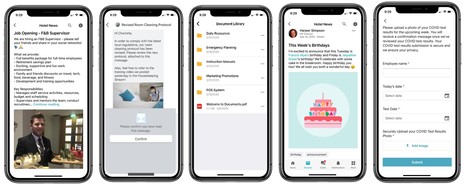
A recent survey polling 30,000+ job seekers found that “many are avoiding work in the restaurant, bar, and hotel industry and nothing can change their minds.” Sixty-nine percent said, “nothing could make them want to work in the hospitality industry (even with higher pay and creative incentives). The labor shortage of 2021 has now turned into the Great Rehire and Resignation Crisis of 2022, and to emerge from this with new talent eager to embrace hospitality, hoteliers must act swiftly, in ways that are different from the past. The focus should be on enhancing the end-to-end employee experience and technology can help here. Before hard-working HR executives can even hope to attract new talent, they should understand what is important to the talent. They don’t mind working hard, but they want to feel part of the success and be recognized for their loyalty. Most people come to work wanting to do a good job and so they want to know that their employer has their back and gives them the training and tools needed for that. The only way to rebuild the hospitality workforce in a sustainable manner — avoiding staff burnout and lesser training — is to work differently. Technology is complementing the human aspect, and digitalizing enterprise communication is proving to make a big difference in the onboarding and retention process. By giving employees real-time digital communication and collaboration tools that they are already familiar with — such as mobile apps they comfortably use in their daily lives and hope to leverage at work to make their jobs easier and tasks more efficient — hotels and restaurants are empowering their people to become effective and integral members of the organization. Digitalizing employee communication and collaboration does two important things: 1) It gives employees a voice and connects them to the company and its core values; having a culture that employees believe in builds retention, and 2) It gives employees the information they need to do their jobs, such as managing an in-house group via a chat group with all relevant parties. This type of digital communication facilitates better coordination of tasks between workers and departments. In the end, guest satisfaction and operational efficiencies soar. Here are eight ways digitalizing employee communications and collaboration can help hotels and restaurants tackle the Great Rehire and Resignation Crisis:
By shifting focus to the employee experience and equipping the hospitality workforce with digital tools that are easy to implement, require no training from end users, and can be rolled out quickly and cost effectively, operators can tackle the Great Rehire and Resignation Crisis more efficiently.
Contact
Barb Worcester
PRpro for Beekeeper
Phone: 440-930-5770
Email: barbw@prproconsulting.com
Organization
Beekeeper
https://www.beekeeper.io/en
80 Grand Ave, Suite 400
USA
- IOakland, CA 94612
Tollfree: 844-423-3533
Email: austin.sandmeyer@beekeeper.io


Recent News
 5 Strategies to Win 78% or Greater Employee Engagement | By Cristian Grossmann 5 Strategies to Win 78% or Greater Employee Engagement | By Cristian Grossmann |
|
Overcome Hotel Turnover and Improve Morale With Better Shift Coordination | By Cristian Grossmann |
|
Hotels and the Frontline Worker Disconnect | By Cristian Grossmann |